Launch planning, interviews and expert positioning for authors
A Book Publicist Who Treats Your Book as the Start of Your Platform
A book publicist for authors who want media, podcasts, radio and speaking built around a launch and beyond. Start with a thirty-minute call with us.
A book publicist gets an author in front of the people who decide what audiences hear about: producers, editors, podcast hosts, event organizers and reporters. The goal is not a single burst on publication day. It is a sustained run of interviews, articles and appearances that makes you the person people think of when your subject comes up.
360 Narrative approaches author work the way we approach any expert: we find the story only you can tell, position you as a voice on the subject, and place you where your future readers already listen. Founder and CEO Elyse Segall has twenty-five years in strategic marketing and media relations and national relationships with producers, editors and reporters, built since her early career in New York.
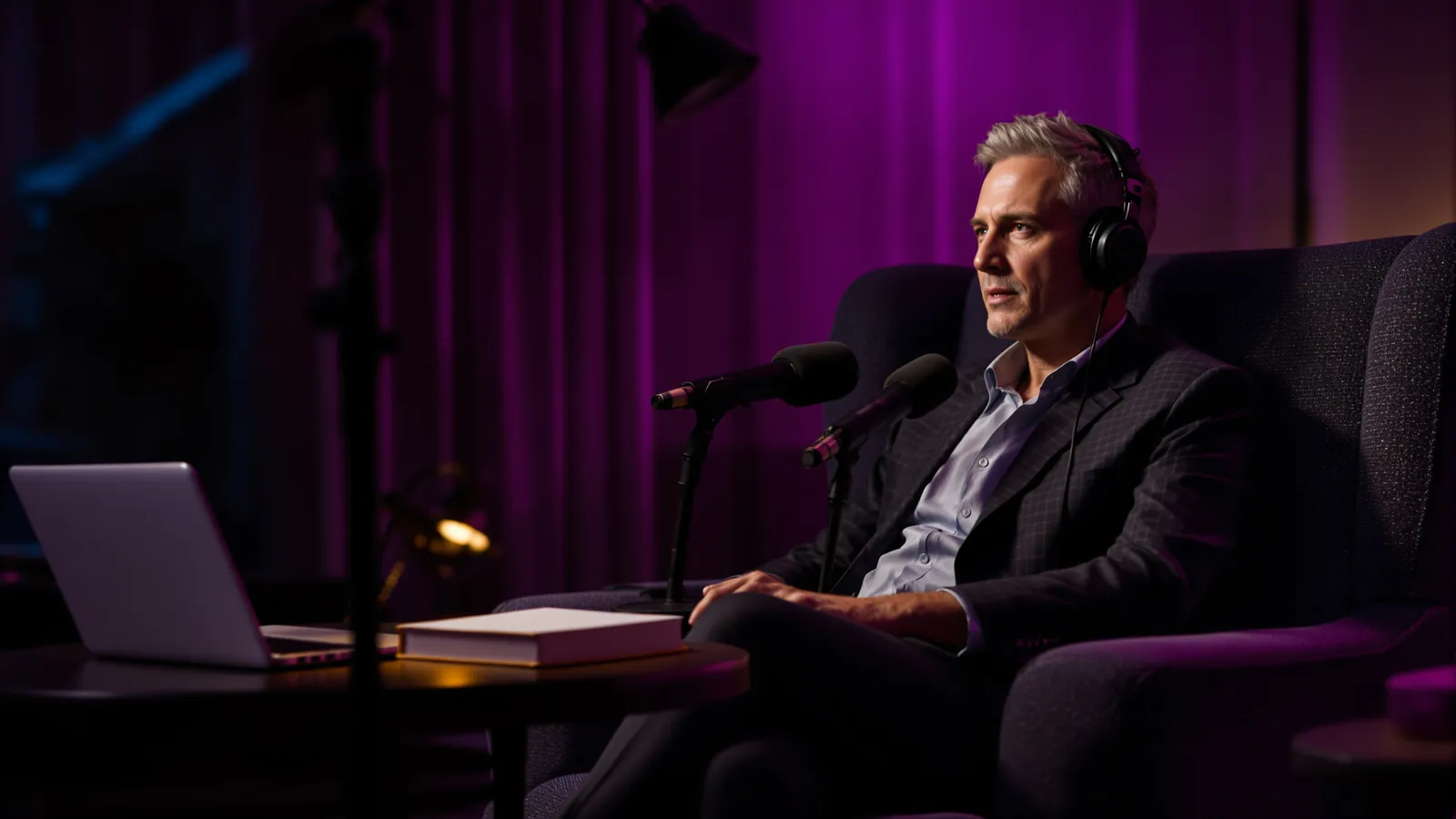
A book publicist plans and runs the media campaign around a book: building the pitch, preparing press materials, booking podcast, radio, television and print interviews, arranging bylines, and tying the book to speaking engagements. The strongest campaigns start months before publication and position the author as an expert well beyond launch week.
What a Book Publicist Actually Does All Day
Authors often imagine publicity as sending a book to a list of journalists and waiting. In practice, the job looks more like running a small newsroom around one person. On a given day, a book publicist might be:
- Rewriting a pitch three ways for a business podcast, a morning show and a trade newsletter.
- Pulling a timely angle from the news and offering the author as a commentator the same afternoon.
- Preparing an author for a ten-minute radio interview where the host has not read the book.
- Drafting an op-ed under the author’s name, then working through edits together.
- Confirming logistics for a bookstore event, a conference panel or a library talk.
- Tracking which appearances drove website visits, newsletter sign-ups or speaking inquiries.
Notice how little of that list depends on the book alone. Media outlets rarely cover a book because it exists. They cover an interesting person with something useful to say, who happens to have written a book about it.
Fiction and nonfiction call for different approaches. Nonfiction authors can trade on expertise: a financial planner who wrote about retirement can comment on market news, a physician who wrote about sleep can discuss health trends in general terms. Novelists rely more on personal story, setting, craft and the themes behind the work. A good book publicist builds the campaign around whichever of those is strongest, rather than forcing one template onto every author.
A Realistic Launch Timeline
The most common mistake authors make is calling a book publicist a few weeks before publication. By then, many of the best opportunities have already closed. Monthly magazines plan their issues months in advance, and popular podcasts book guests well ahead.
| When | What happens |
|---|---|
| Six months out | Positioning, angle development, media target lists, author photography and bio |
| Four to five months out | Long-lead outreach to monthly magazines and podcast bookers; advance copies to selected producers and editors |
| Two to three months out | Press kit finalized, op-ed and byline pitches, event and speaking outreach |
| Final month | Radio and television pitching, local media, interview prep and media training |
| Publication week | Interviews air and publish, events begin, newsletter and partner announcements |
| Months after | Evergreen and news-driven commentary, speaking, anniversary and paperback angles |
Shorter timelines can still work, especially for nonfiction authors who can comment on the news. But the more lead time a book publicist has, the more doors are still open.
If your date is close
Publication in six weeks? It is not too late, but the plan changes. A book publicist will concentrate on faster-moving channels: podcasts with shorter booking windows, radio, online outlets, local media and timely commentary tied to the news. Long-lead magazines may be out of reach for launch, but they can still come into play for later angles, such as a related holiday, an anniversary or a paperback release.
Positioning the Author, Not Just the Book
A book has a launch window. An expert has a career. The authors who get the most from publicity treat the book as a credential that opens doors to ongoing commentary, speaking and partnerships.
Finding the angle
We start by listening: long interviews about your background, your research, the opinions you hold that others in your field do not, and the questions readers ask you most. From that we draft a short set of story angles. One might tie to a news trend, another to a common mistake people make, another to your personal story. Each angle suits different outlets.
Building the press kit
A strong press kit includes a one-paragraph and a one-page bio, professional headshots, a short summary of the book’s argument or story, a list of interview topics phrased as questions a host might ask, sample talking points, and links to prior appearances. Producers use these to decide quickly if you fit their show.
Bylines and thought leadership
Publishing articles under your name in respected outlets reinforces your expertise and reaches readers who might never hear a podcast. Our thought leadership work plans bylines that stand on their own as useful pieces, not thinly disguised book ads.
Media training for authors
Writing a great book and talking about it well are different skills. Many authors explain their ideas in long, careful paragraphs, which is perfect on the page and difficult on air. Our media training helps you shape short, vivid answers, tell your best stories in ninety seconds, handle hosts who have not read the book, and steer back to your main points without sounding rehearsed.
Your website and newsletter
Every interview sends curious people to search your name. What they find should be current: a simple author site with a clear bio, the book, upcoming events, a media page and a way to join your mailing list. A newsletter is the one audience you own outright, and it keeps readers connected long after any single interview fades. We help set up or tighten these before outreach begins, so attention has somewhere useful to land.

Podcasts and Radio: Where Authors Find Readers
For many nonfiction authors, long-form audio is the most effective channel available. A host who spends an hour with you gives listeners time to understand your thinking, and listeners who like you go looking for the book. Radio, from local morning shows to syndicated programs, reaches audiences who may not seek out podcasts at all.
What a producer needs from a book publicist
- A clear reason this guest fits this show’s audience right now.
- A short list of specific topics, ideally phrased as questions.
- Evidence the author is a good talker: a clip, a prior episode, a video.
- Flexible availability and reliable logistics.
- A guest who shows up prepared, with good audio, on time.
We handle the first four and prepare you for the fifth. That means testing your microphone and room, practicing concise answers, and learning to mention the book naturally without turning every answer into a sales pitch. Hosts notice the difference, and they invite good guests back.
Radio can be especially efficient. In a single morning, an author can complete several short interviews with stations in different markets, each reaching listeners on their commute. Your book publicist arranges the schedule, briefs each host, and makes sure you have water, notes and a quiet room. The pace is quick, so preparation is what separates a forgettable segment from one that sends listeners searching for your name.
Further reading: PRSA Code of Ethics.
Speaking Tie-Ins That Keep a Book Working
Speaking and books reinforce each other. A strong talk sells books, and a book makes a speaker easier to book. Our speaker booking service treats the two as one plan.
- Conferences and industry events in your field, where attendees are your readers and potential clients.
- Corporate talks for companies whose teams would benefit from your subject.
- Bookstore, library and community events that build local support and press.
- University and professional association talks for academic and specialist authors.
- Panels and moderated conversations that pair you with other recognized voices.
We develop your talk with you, write speaker bios and session descriptions, pitch organizers, and follow each appearance with outreach to local and trade media. Through our speaking engagements service we also coach delivery, so the talk you give in month twelve is sharper than the one you gave at launch.
Speaking also gives your publicity a second life. A recording of a strong keynote becomes a clip for podcast producers, a byline idea for a trade publication, and proof for the next event organizer. Each appearance builds the case for the next one.
Virtual events count too. Webinars, online book clubs, association livestreams and company lunch-and-learns let you reach audiences in other cities without travel, and they are often easier to schedule during a busy launch month. We treat them with the same preparation as an in-person talk: a clear title, a tight outline and a specific next step for attendees, such as joining your list.
Working Alongside Your Publisher
If you have a traditional publisher, you may already have an in-house publicist. They are often responsible for many titles at once, and their focus naturally centers on the launch period. An independent book publicist can extend and deepen that work rather than duplicate it.
We coordinate early with your publisher’s team so everyone knows who is pitching which outlets, and so no producer receives two competing pitches about the same author. Common divisions of labor include the publisher handling trade and book media while we handle business, lifestyle, podcast and broadcast outreach, or the publisher covering launch month while we continue with speaking and commentary for the following year.
If you published independently, we take on the full campaign. Independent authors often have more control over timing and messaging, which can be an advantage when the plan is built carefully.
Questions to ask any book publicist before hiring
- Who will actually pitch my book, and how senior are they?
- Which outlets and shows do you think fit my book, and why?
- How do you coordinate with my publisher’s team?
- What will you report, and how often?
- What happens after launch month?
A good book publicist answers those questions specifically and does not promise particular placements. Be cautious with anyone who promises bookings on named shows; no one controls a producer’s decisions.
Book Publicist Support for South Florida Authors
South Florida offers authors a few distinct advantages. Miami Book Fair, held each November at Miami Dade College, draws writers and readers from across the country and gives local authors a natural moment for events and press. The region’s bilingual audience means authors who write or speak in Spanish can reach Spanish-language television, radio and print alongside English-language outlets.
Local business communities, universities, professional associations and civic organizations across Miami, Fort Lauderdale, Boca Raton and the Palm Beaches regularly host speakers, which gives nonfiction authors chances to build a hometown base before going national. We work with authors here and anywhere in the country; a local base simply makes it easier to start with momentum.
A local book publicist also knows that South Florida’s calendar is seasonal. Winter brings seasonal residents, visitors and a busy schedule of cultural and community events, which can be a strong window for author talks. Summer is quieter locally but can be a good time to work national podcasts and long-lead outlets for the fall.
For authors anywhere, the same logic applies: start with the communities that already know you, such as your alumni network, professional groups, hometown media and clients, then use that early support as proof when pitching national outlets.
How We Work as Your Book Publicist
Our method has five steps: Listen, Position, Place, Amplify, Measure. We listen to you and to your readers. We position you as the expert on your subject. We place you in podcasts, radio, television, print and on stages. We amplify each appearance through your newsletter, website, partners and, where useful, our digital marketing team. And we measure what moves your goals, whether that is speaking inquiries, consulting leads, newsletter growth or sales you can track.
Senior people work on your campaign from the first meeting. If an angle will not get traction, we tell you and offer a better one. Read more about the team on our about page, or schedule a thirty-minute call to talk about your book, your goals and your timeline.
In the first month of working together you can expect interviews with our team, a written positioning summary with story angles, a draft press kit, a target list of outlets, shows and events, and a timeline mapped to your publication date. After that, the work becomes a steady rhythm of pitching, booking, preparing and following up. Your book publicist checks in with you weekly so you always know what is pending and what has landed.
Book Publicist: Frequently Asked Questions
When should an author hire a book publicist?
Ideally four to six months before publication, so there is time to develop angles, prepare materials and reach long-lead outlets and popular podcasts. Authors who come to us later can still run an effective campaign, especially nonfiction authors who can comment on current events. Publicity can also start after publication, positioning the author for speaking and ongoing commentary.
What is the difference between a book publicist and a literary agent?
A literary agent represents your book to publishers and negotiates the publishing deal. A book publicist works after the deal, or alongside self-publishing, to earn media attention for the author and the book. Agents focus on the sale of rights; publicists focus on interviews, articles, appearances and the author’s public profile.
Can a book publicist get me on national television?
National television is possible for authors with a timely, visual or broadly relevant story and strong on-camera skills, but no honest publicist can promise it. We pitch broadcast where it fits, prepare you through media training, and build a record of strong podcast, radio and print appearances that makes producers more willing to take a chance on a new guest.
Do you work with self-published authors?
Yes. We look at the book, the author’s expertise and the audience to judge whether a media campaign makes sense, and we say so plainly if it does not. Self-published nonfiction authors with professional credentials and clear expertise are often good candidates, particularly when the goal includes speaking, consulting or building a long-term platform.
How do you measure book publicity?
We track interviews secured and aired, articles and bylines published, speaking engagements booked and the audiences they reached. Where possible we connect those appearances to outcomes you can see, such as website visits, newsletter sign-ups, speaking inquiries and sales data from your publisher or platform. Reports are written in plain language, with honest notes on what worked.
Related
 ServicePublicistWhat a publicist actually does each day, how pitching works, what month one looks like and how to judge one. Book a…Read
 ServiceThought LeadershipThought leadership built on a real point of view: bylines, op-eds, expert commentary, podcasts and keynotes. Talk to our senior team about…Read
 ServiceSpeakers Bureau & Speaker BookingA speakers bureau approach run by a PR team: positioning, conference and podcast placement, talk coaching and press after the event. Book…Read
 IndustryPersonal Branding AgencyA personal branding agency for founders, executives and experts: positioning, bios, media, speaking and the search results for your name. Book a…Read
 ServiceMedia TrainingMedia training for executives and spokespeople: TV, print, podcast and hostile interview drills that build message discipline. Book a call.Read
 ServicePress Release Writing & DistributionPress release services from a senior PR team: when to send one, how we write it, wire distribution, timing and honest pickup…Read
Explore more services, cities & industries
South Florida
- Miami PR Agency
- Fort Lauderdale PR Firm
- Miami SEO
- Miami Marketing Agency
- Miami Digital Marketing
- Fort Lauderdale SEO
- Fort Lauderdale Marketing Agency
- Fort Lauderdale Digital Marketing
- Boca Raton SEO
- Boca Raton Marketing Agency
- Boca Raton Digital Marketing
- West Palm Beach SEO
- West Palm Beach Marketing Agency
- West Palm Beach Digital Marketing
- Broward PR Agency
- Broward Web Design
- Pembroke Pines Web Design
- Davie Web Design
- Pompano Beach Web Design
- Miramar Web Design
- Coral Springs SEO
- Palm Beach Public Relations
- Palm Beach SEO
- Palm Beach Web Design
- Delray Beach SEO
- Delray Beach Web Design
- Delray Beach Digital Marketing Agency
- Jupiter Web Design
- Boynton Beach SEO
- Wellington SEO
Industries
- Lifestyle Public Relations
- Fashion Public Relations
- Beauty Public Relations
- Music PR Agency
- Sports Public Relations
- Entertainment PR Agency
- Tech PR Agency
- Crypto PR Agency
- Startup PR Agency
- Fintech PR Agency
- Healthcare PR Agency
- Book Publicist
- Personal Branding Agency
- B2B PR Agency
- Law Firm Public Relations
- Travel & Hospitality PR Agency
- Food Public Relations
- Nonprofit Public Relations
- Consumer Products PR Agency